
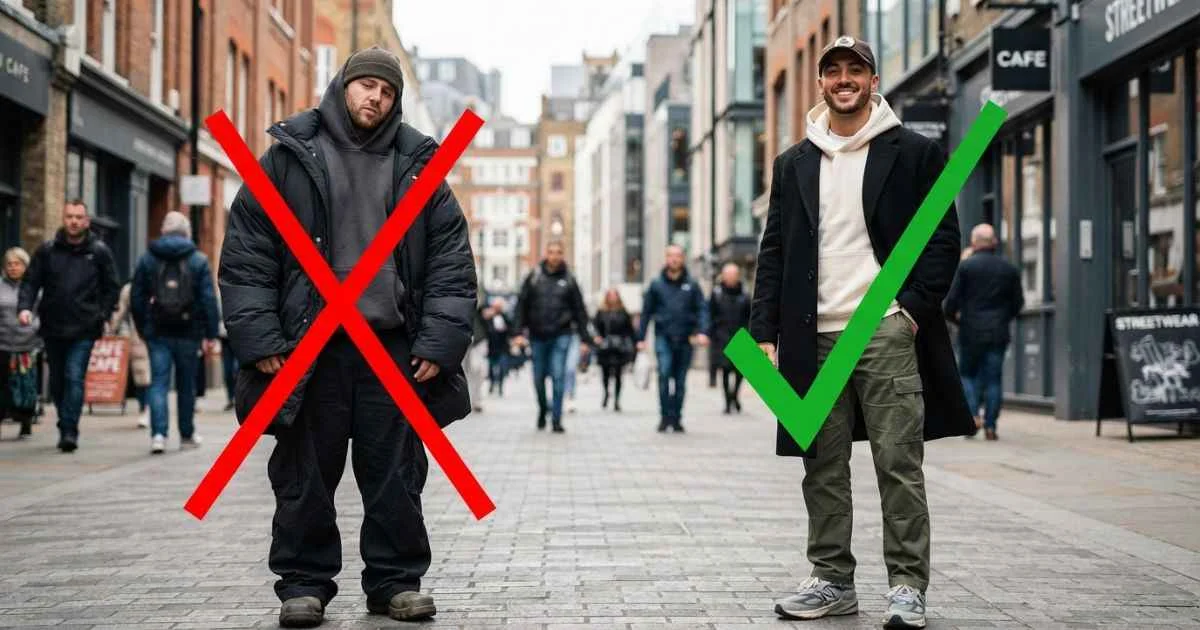
Good streetwear layering tips almost always come back to one framework: base, mid, and outer layer, each doing a specific job. Without that structure, layering just adds bulk instead of building a look. This guide breaks down that framework in full, along with fabric weight, silhouette balance, and outfit combos for both cold and mild weather.
The Three-Layer Streetwear Formula (Base, Mid, Outer)
The three-layer streetwear formula breaks an outfit into a base layer, a mid layer, and an outer layer, each with a specific job: the base sits close to the body, the mid adds warmth or texture, and the outer layer finishes the silhouette and handles the elements.
Your base layer is usually a fitted tee or long-sleeve top. Its job is to sit smooth and close to the body, giving the layers above it something clean to build on. A base layer that’s too loose competes with the layers over it instead of supporting them.
The mid layer is where most of streetwear’s signature bulk comes from: a hoodie, a flannel, or a heavier sweatshirt. This layer usually has the most volume in the outfit, since it’s meant to be seen and to shape the outfit’s overall silhouette.
The outer layer, like a jacket, coat, or overshirt, finishes the look and adds structure. It doesn’t need to be as loose as the mid layer since it’s mainly there for shape, warmth, and weather protection rather than being the main visual focus.
How to Mix Fabric Weights Without Overheating or Bulking Up
Mixing fabric weights the right way keeps a layered outfit warm without making it feel stiff or overheated. A light base, a medium mid layer, and a heavier outer layer is the safest combination for most weather.
A common mistake is stacking two heavy fabrics together, like a thick fleece hoodie under a heavy wool coat. This traps too much heat and adds bulk without adding much visual benefit. Instead, pair a lightweight base layer with one heavier mid or outer piece, not both.
For cooler but not freezing days, a medium-weight cotton hoodie under a lighter jacket usually gives enough warmth without overheating indoors. Save the heaviest fabric combinations, like fleece under a padded coat, for genuinely cold weather.
Balancing Oversized and Fitted Pieces When Layering
The core rule of streetwear layering is simple: if one layer is oversized, balance it with a fitted layer somewhere else in the outfit. Stacking multiple oversized pieces at once, like a baggy hoodie under a huge coat, tends to erase your shape entirely instead of creating an intentional silhouette.
A practical way to apply this: if your mid layer, like a hoodie, is oversized, keep your base layer fitted underneath and your bottoms closer to the body too. This creates contrast between layers instead of one big shapeless block. The same logic applies in reverse, a fitted mid layer can support a slightly looser outer layer without the outfit losing its shape.
Layering for Cold Weather Streetwear
Cold weather layering leans on the full three-layer formula, since warmth becomes just as important as style. A fitted long-sleeve base, a medium-weight oversized hoodie, and a structured puffer or wool coat on top gives both warmth and a clean silhouette.
Straight-leg or slightly tapered pants work best underneath a bulkier top layer, since they keep the bottom half of the outfit from adding extra bulk. Boots or high-top sneakers finish the look and hold up better in colder, wetter conditions than low-top styles.
Layering for Mild or Transitional Weather
Mild weather calls for a lighter version of the same formula. A fitted tee as the base, a lightweight overshirt or unzipped hoodie as the mid layer, and a light jacket or flannel as the outer layer covers most transitional-weather days without overheating.
This lighter setup still follows the same oversized-fitted balance, just with less fabric overall. If you’re dressing for a warmer climate most of the year, streetwear outfits for hot weather covers how to keep that same layered look while staying cool.
Common Layering Mistakes That Look Sloppy Instead of Styled
| Mistake | Fix |
|---|---|
| Stacking two oversized pieces | Balance one oversized layer with a fitted one |
| Mixing two heavy fabrics together | Pair a heavy piece with a lighter one, not two heavy pieces |
| Skipping the base layer entirely | Add a fitted tee or long-sleeve underneath for structure |
| Wearing bulky bottoms under a bulky top | Keep bottoms fitted or straight when the top layer is loose |
| Layering without a clear outer piece | Finish the outfit with a jacket or overshirt for a complete silhouette |
Layer Reference Table
| Layer | Typical Fabric Weight | Example Pieces |
|---|---|---|
| Base | Light | Fitted tee, long-sleeve top |
| Mid | Medium | Hoodie, flannel, sweatshirt |
| Outer | Medium to heavy | Jacket, overshirt, coat |
Frequently Asked Questions
How many layers is too many for a streetwear outfit?
Three layers, base, mid, and outer, usually covers most outfits without adding unnecessary bulk. Adding a fourth layer often starts to feel heavy and can hide your silhouette instead of shaping it.
Can I layer streetwear pieces in humid weather?
Yes, but stick to lighter fabrics throughout, like a thin base layer and an unzipped, lightweight overshirt instead of a heavy hoodie. Breathable cotton blends work better than thick fleece in humid conditions.
How should petite frames approach layering?
Petite frames generally look best keeping at least one layer close-fitting, usually the base or bottoms, so the layered look doesn’t overwhelm a smaller frame. Cropped outer layers can also help keep proportions balanced.
Can I layer streetwear pieces with a skirt?
Yes, an oversized hoodie or jacket layered over a fitted top with a skirt underneath works well and adds a feminine contrast to a streetwear-inspired look. Keeping the skirt fitted helps balance the volume up top.
Do I need matching colors across all my layers?
No, matching isn’t required. A neutral color palette across two or three tones tends to look more cohesive than trying to match every layer exactly, and it also makes mixing and rewearing pieces easier.
Your Next Step
Try building one outfit using the full three-layer formula this week: a fitted base, one mid layer with some volume, and a structured outer piece. Notice how much more intentional it looks compared to grabbing layers at random.

Maya Brooks is a lifestyle and fashion writer at BaddieHub Magazine. With a passion for culture, trends, and self-expression, she brings readers fresh insights on style, wellness, and modern living. Maya believes in empowering individuals to embrace bold fashion choices and authentic lifestyles. Her work blends real-world experience with engaging storytelling to connect with a global audience.
When she’s not writing, Maya enjoys exploring new travel destinations, discovering local streetwear culture, and sharing everyday tips that inspire confidence and creativity.


