
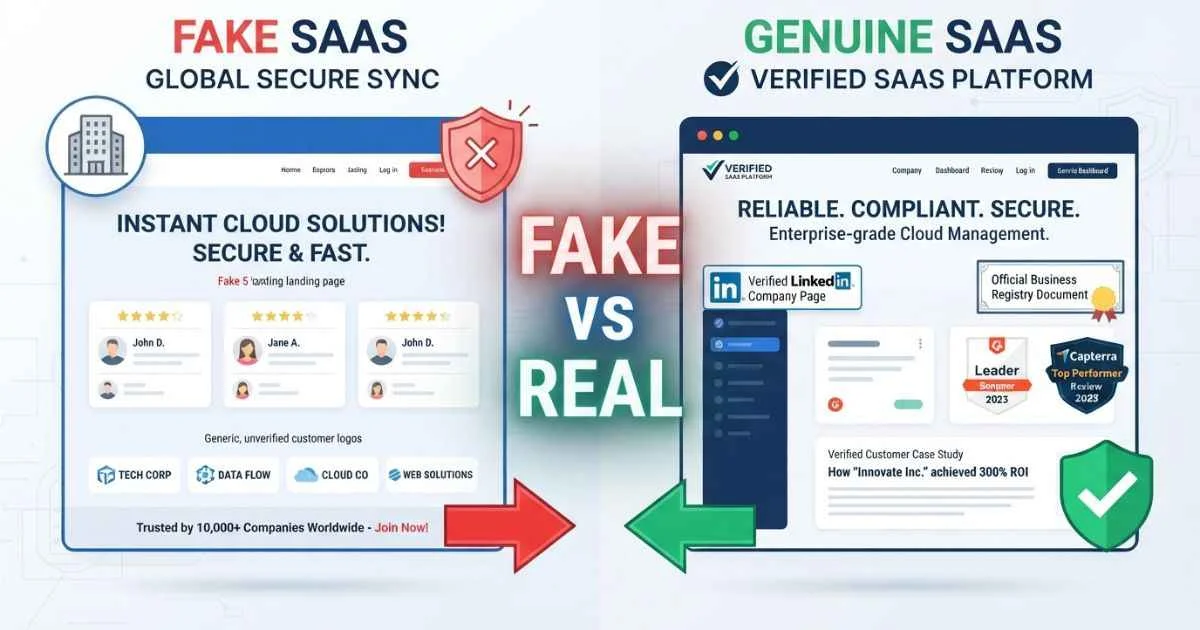
Checking whether an online store is safe is one problem. Judging whether a B2B software vendor or business service is real is a different one. This guide covers how to spot fake business or SaaS websites specifically, using signals that matter far more to buyers evaluating software or services than to everyday shoppers.
B2B buyers face a different kind of risk than online shoppers. The purchase is often bigger, the sales cycle longer, and the damage from choosing a fake or shell company can affect an entire team, not just one order.
Why B2B verification is different from checking a store
Direct answer: A fake SaaS or business site relies on signals a typical shopper never checks, like company registration records, verifiable case studies, and third-party software review platforms. Reviews and HTTPS still matter, but they’re rarely enough on their own for a business decision.
Many of the checks in our main guide to checking if a website is legit still apply here, especially HTTPS and contact verification. What’s different is the depth expected before signing a contract or sharing company data.
Check company registration
Direct answer: A real business, especially one asking for company data or a signed contract, should be registered somewhere you can verify independently, not just claimed on an “About” page.
- Search the company name in your country’s business registry, such as Companies House in the UK or a state’s Secretary of State business search in the US
- Check whether the registered address matches what the company lists on its own site
- Note how long the company has been registered, since a business claiming “10 years of experience” with a one-year-old registration is worth questioning
A missing registration doesn’t automatically mean fraud, since some legitimate freelancers and small teams operate informally. It does mean you should weigh other signals more heavily before committing.
Verify case studies and testimonials
Direct answer: Fake SaaS sites often display detailed-sounding case studies and client logos that can’t be verified anywhere outside the vendor’s own site.
Ways to check:
- Search for the named client company plus the vendor’s name to see if the relationship is mentioned anywhere independently, such as in a press release or the client’s own case study page
- Look up quoted individuals on LinkedIn to confirm they exist and hold the role attributed to them
- Be cautious of client logos displayed with no names attached, since a logo alone is easy to include without permission
A single unverifiable case study isn’t necessarily a red flag. Several unverifiable ones, especially with no independently confirmable client relationships at all, is a stronger concern.
Check the LinkedIn company page
Direct answer: A real, established business usually has a LinkedIn company page with a plausible employee count, some organic activity, and employees who list the company on their own profiles.
What to look for:
- Employee count that roughly matches what the company claims about its size
- Employees whose LinkedIn profiles independently list the company, not just the company page listing them
- Some posting history, rather than a page created days ago with no activity
A very new company page isn’t automatically suspicious for a genuinely new business. It becomes more relevant when combined with other unverifiable claims, like a long operating history the page doesn’t support.
Check independent software review platforms
Direct answer: For software specifically, platforms like G2 and Capterra collect independent user reviews that a vendor can’t simply write or delete, similar in purpose to Trustpilot for online stores.
- Search the product name on G2 or Capterra directly, rather than trusting only the badges a vendor displays on its own site
- Read reviews for specific, detailed feedback about actually using the product, not just star ratings
- Check whether the vendor responds to critical reviews, since active engagement is a positive sign
For the general method of separating trustworthy reviews from fake ones on any platform, our guide on how to check a website’s reviews before trusting it covers the deeper mechanics.
Verify funding and team claims
Direct answer: Claims about funding rounds, investors, or team size are easy to state and harder to verify, but usually leave some independent trace if they’re true.
- Search the company name alongside terms like “funding” or “raises” to see if any funding announcement appears outside the company’s own site
- Check whether named investors or advisors list the relationship on their own public profiles
- Compare the claimed team size against the actual number of employees visible on LinkedIn
A startup that hasn’t announced funding publicly isn’t automatically hiding something. The concern is a specific, detailed funding claim that produces zero independent confirmation anywhere.
A quick verification checklist for B2B and SaaS sites
- [ ] Company appears in a relevant business registry
- [ ] At least one case study or testimonial has been independently verified
- [ ] LinkedIn company page exists with a plausible, active team
- [ ] Product appears on G2, Capterra, or a similar independent review platform
- [ ] Any funding or major client claims have some independent trace
If a vendor fails three or more of these before a contract involving real money or company data, treat it as a reason to slow down and ask more direct questions.
FAQs about spotting fake business and SaaS websites
Is it normal for a small SaaS company to have no G2 or Capterra reviews yet?
Yes, especially for a very new product. In that case, lean more heavily on verifiable case studies, LinkedIn activity, and direct references from other customers you can actually contact.
How do I check if a company is really registered?
Search your country’s official business registry directly, such as Companies House in the UK or a state’s business search tool in the US, rather than trusting a registration number listed only on the company’s own site.
Are fake case studies illegal?
Fabricating client relationships or results can cross into deceptive business practices, which many countries regulate, though enforcement varies. Regardless of legality, an unverifiable case study is a practical reason for caution before signing a contract.
Should I ask a vendor directly for references?
Yes. A legitimate vendor with real customers can usually provide at least one reference you can contact directly, separate from the testimonials already published on their site.
What’s the biggest red flag specific to fake SaaS sites?
A polished product page paired with zero independently verifiable evidence, no registry listing, no confirmable clients, no active LinkedIn presence, and no reviews on independent platforms, is the strongest combined warning sign.
Your next step
Before your next software or B2B purchase, search the company name in your country’s business registry. It takes a couple of minutes and confirms something no amount of website polish can fake.
This guide helps you assess risk. It cannot guarantee complete safety. When in doubt, verify independently before signing a contract or sharing company data.

Victor Rennard is a multi-niche writer for BaddieHubMagazine.com, creating clear and engaging articles across lifestyle, trends, tech, entertainment, and general guides. With a simple, helpful writing style, Victor aims to give readers quick insights and reliable information on topics that matter.


